Step 01
Shoot with guidance
The app puts you in the right spot: stand here, phone at this height, horizon level. A room checklist means you don't drive back across town for the laundry room.
Shoot the place on whatever you have. CrispyFrame returns exposure-blended, window-pulled, level, publish-ready photos — a 40-photo listing back in about 45 seconds, not 15 to 30 minutes.
No card · 25 photos free · Keeps your look
 Twilight · Sky · Grass+1.8 EV recovered3 generated edits — logged & disclosed00:43 · 41 photos
Day to dusk
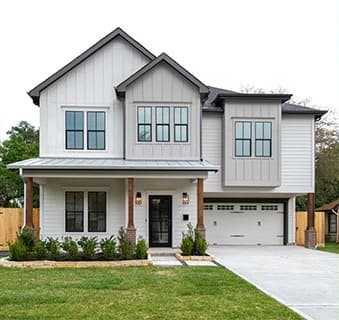
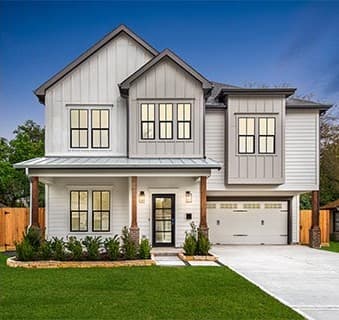
One exterior, square-on under a blank overcast sky. On the right, one generative pass: sky graded deep blue, every window lit from inside, lawn evened out, trees dropped to silhouette.
Drag the handle — or use ← / → keys
How it works01 → 03
For a phone shooter, input quality matters more than editing ever will. So we start before the shutter.
The app puts you in the right spot: stand here, phone at this height, horizon level. A room checklist means you don't drive back across town for the laundry room.
A learned tone model does the base edit — exposure, white balance, colour, window pull, verticals — in about a second. Only the photos that genuinely need sky, twilight or removal go further.
Download full resolution, or push straight to your MLS folder or listing draft. Every photo ships with a plain-English record of what changed and what was generated.
What it does
Everything a human editor would do to a set of listing photos — and the ones they'd charge extra for.
Brackets or a single handheld frame, merged into one even exposure. No halos, no grey mush.
Recover the view outside instead of a white rectangle — while the interior stays lit.
Overcast to blue, matched to the light already falling on the house. Not a sticker.
A 2 PM exterior becomes a dusk shot with warm windows, in a single pass.
Dormant lawn revived — bounded to the lawn, so the siding and driveway stay put.
Bins, cords, cars, the stray shoe by the door. Gone — and written into the log.
Black mirrors become clean screens — without you and your phone reflected in them.
Walls plumb, horizons level, wide-lens distortion undone before anything else runs.
Nine near-identical kitchen frames go in. The sharpest, best-composed one comes out.
Empty rooms furnished in a style you choose — and flagged as staged, every single time.
Why it's faster
The incumbent pipeline pushes every single photo through a large diffusion model. That's why a set takes 15 to 30 minutes, and it's why the bill looks like it does — you pay generative compute for a bathroom that only needed a half-stop of shadow lift.
We staged it. A learned tone model handles the base edit on 100% of photos in about a second each. Generative models are invoked only for the ~25% that actually need sky, twilight or object removal — and every one of those invocations is logged on the photo.
Illustrative pipeline · 12-photo sample set
Pricing
Nothing expires. No 500-photo minimum. If you shoot one house this month, you pay for one house.
For short-term-rental hosts shooting and re-shooting their own places.
$29/ month
For agents shooting their own listings. Pay per listing, subscribe to nothing.
$15/ listing
For semi-pro photographers who'd rather not pay a human editor per set.
$0.20/ photo, volume credits
Baseline: AutoHDR's published $265 / month for 500 photos = $0.53 per photo, with a 15–30 minute turnaround, sold only to professional photographers. Our figures assume the photo volumes shown on each plan. Comparison is for orientation, not a quote.
Questions
The base tone edit lands in about 1.2 seconds per photo. Photos that need a generative pass — sky, twilight, object removal, staging — take 10 to 25 seconds each. A typical 40-photo listing where nine or ten photos need generative work comes back in roughly 45 seconds, start to finish. You'll see them appear as they finish, not all at the end.
Every generated change is disclosed and logged per photo — what model touched it, what it changed, and when. You get a downloadable disclosure sheet with the set, and you decide which generated edits to keep before you publish. Disclosure rules vary by MLS and by state; the log is what makes complying with them possible. It isn't legal advice, and it isn't a promise about your particular board's rules.
No. A recent phone is fine, and it's what most of our agents and hosts use. That's exactly why we put the effort into guided capture: where you stand, how high you hold the phone and whether the horizon is level will change the final photo more than any editing step can. If you do shoot a mirrorless body with brackets, we'll group and merge them automatically.
Point it at 30 to 50 of your finished photos and it trains a style profile on them — your contrast curve, your white balance, how warm you run interiors, how much you lift shadows. Photographers can keep a separate profile per client and switch between them per set.
Three reasons, in order of how much they'll matter to you: turnaround drops from 15–30 minutes to well under a minute; you stop buying 500-photo credit packs to cover a 40-photo week; and you can import your existing look instead of relearning someone else's presets. If you shoot enough volume that $265 a month is already good value, our Pro tier is $0.12–$0.20 per photo with nothing expiring.
They're yours. Originals and edits stay in your account, you can delete either at any time, and we don't train shared models on your images unless you explicitly opt in. Style profiles trained on your photos are scoped to your account and never shared between customers.
Re-run any single photo with a different intent — keep the sky, don't stage this room, leave the car in the driveway — or fall back to the untouched original, which we always keep. Rerunning a photo doesn't cost another listing or another credit.
Twenty-five photos free, no card. Bring one room or a whole house.